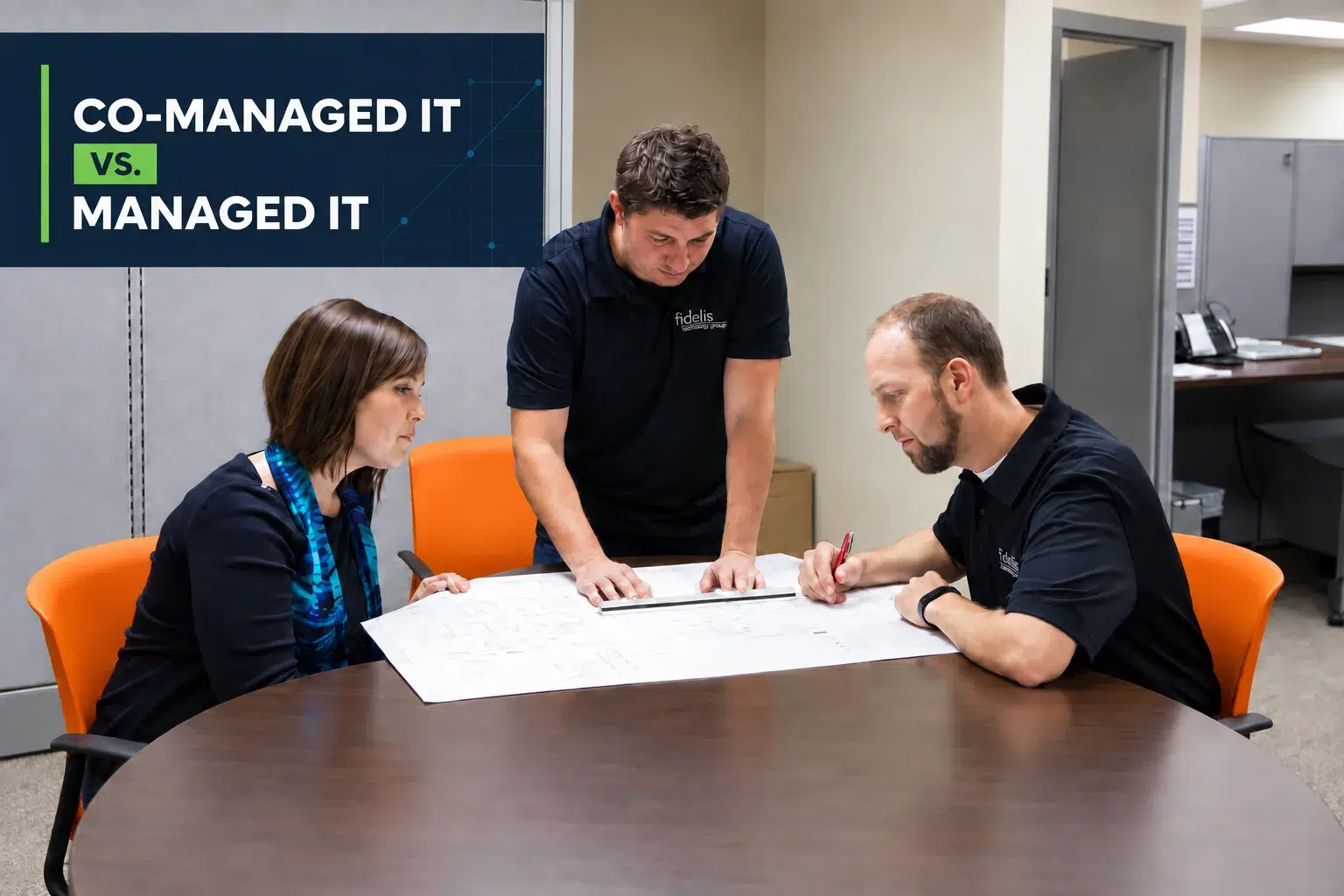

When technology is running smoothly, your team can focus, customers get quicker service, and leadership can plan with confidence. When it is not, even small issues can turn into lost time, frustrated employees, and unexpected costs.
For many small and mid-sized organizations, outsourcing some or all technology support is a practical way to reduce risk and improve reliability. The question is not whether you need help. The question is how much help you want, and how much control you want to keep in-house.
Two common options are managed IT and co-managed IT. Both can strengthen security, reduce downtime, and make budgeting easier. The best fit depends on your team structure, goals, and how much internal capacity you have today
What is the difference between managed IT and co-managed IT?
Managed IT (fully outsourced support)
Managed IT services is a model where an outside Managed Service Provider (MSP) partner takes primary responsibility for your organization’s technology. This is often the right choice if you do not have an internal technology team, or if technology support has become a shared burden across several roles.
A managed IT partner typically handles the day-to-day work that keeps your business running, including:
- Supporting employees when they need help
- Maintaining and updating systems to reduce disruptions
- Protecting your business from common security threats
- Keeping backups in place so data can be recovered
- Guiding planning and budgeting so you are not guessing year to year
The outcome is simple. Your technology becomes more dependable, and your staff gets more time back to do their real work.
Co-managed IT (shared support with your internal team)
Co-managed IT services is a partnership model. You keep your internal technology team, and your provider fills gaps by taking on specific responsibilities or providing extra capacity.
This approach works well when you already have internal support, but the team is stretched thin, missing specialized skills, or needs coverage during vacations, after-hours issues, or periods of growth.
With co-managed IT, you decide how responsibilities are shared. For example:
- Your internal team focuses on business-critical projects and systems
- Your MSP supports employees with everyday requests, or the other way around
- Your MSP provides extra security monitoring and guidance, while your team manages internal operations
The outcome is more capacity, better coverage, and fewer stalled projects, without replacing the people who already know your business best.
When managed IT is usually the best fit
Managed IT is often the best choice when:
- You do not have dedicated internal technology staff
- Your “unofficial IT person” is wearing too many hats
- Technology problems are interrupting the whole team
- You want a predictable monthly cost and fewer surprise emergencies
- You want technology to be reliable without taking up leadership time
In short, managed IT removes the daily technology burden so you can focus on running the business.
When co-managed IT is usually the best fit
Co-managed IT is often the best choice when:
- You already have an internal technology team
- That team is overwhelmed by tickets, maintenance, or constant interruptions
- You want your internal staff focused on strategy, projects, and improvements
- You need added security support or coverage of a security operations center (SOC), extra hands, or deeper expertise without hiring full time
- You want flexibility to scale support up or down as needs change
In short, co-managed IT helps your internal team do their best work, without burnout.
A simple way to decide
If you want your technology fully handled by a trusted partner, managed IT is likely the best path.
If you have internal technology staff and want to strengthen them with extra capacity and specialized support, co-managed IT is likely the better fit.
Either way, the goal is the same. You get a more stable, secure, and productive environment that supports your people and your mission.
Partner with Fidelis
Fidelis supports organizations across the Pacific Northwest with both managed and co-managed IT services. We partner with you to reduce technology burdens, strengthen security, and build a plan that fits your organization, not a generic package.
If you are deciding between managed and co-managed support, we can help you evaluate what will deliver the best results for your team and your budget.Contact Fidelis today to talk through your options and find the right fit.